
Samurai Dash-Fast Hit
Philip Fowler LabsArcade
3.3167.00 Reviews
- Version
- 1.9.14
- Installs
- 10.00M
- Age Rating
- Teen
Screenshots
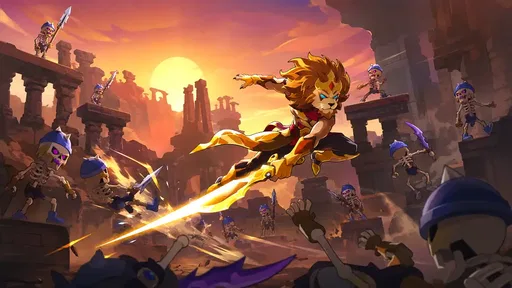
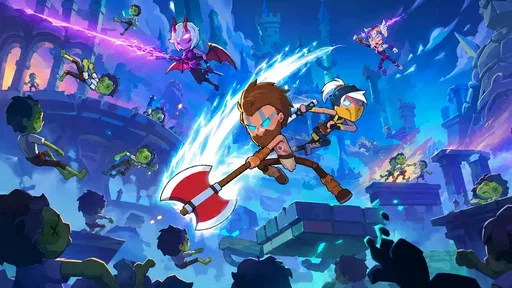
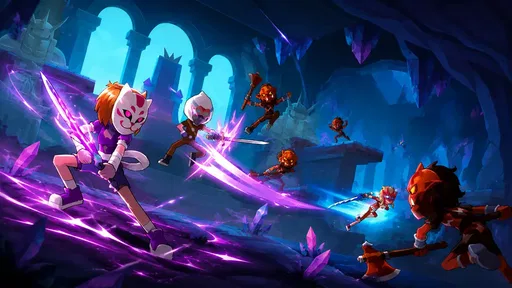
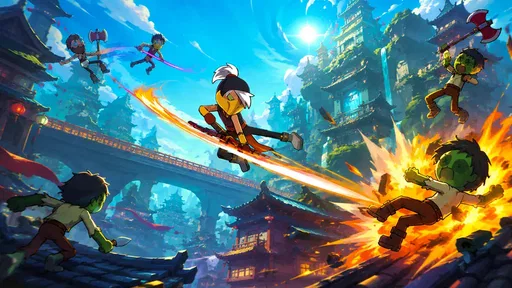
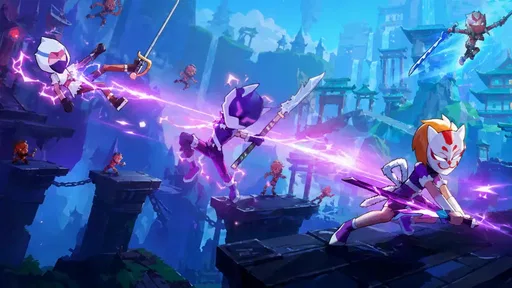
Our Review of Samurai Dash-Fast Hit
 Analysis by Appyee
Samurai Dash-Fast Hit makes a very clear first impression: this is an arcade game built around danger arriving quickly and punishment arriving even faster. I spent time with it expecting a light reflex challenge, but its one-hit structure gives every movement more weight than the simple presentation might suggest. The basic idea is easy to understand, yet surviving consistently asks for attention, patience, and a willingness to restart without overthinking the previous mistake.
That focus is the main reason I found it easy to pick up during short breaks. I did not need a long tutorial or a complicated explanation before playing. The store summary describes a world where one hit is enough to end the attempt, and that principle shapes the entire experience. It is not trying to be a large role-playing adventure or a deep fighting simulator. It is a compact arcade game about reading danger, acting at the right moment, and learning from repetition.
Fast first impressions and a demanding arcade loop
The game comes from Philip Fowler Labs and is available free of charge, which makes it simple to try without making a commitment. It belongs to the kind of mobile experience I can open while waiting for a bus, during a short pause at work, or when I want something more active than scrolling. The short-session design is especially useful because a failed attempt does not feel like losing a large block of time.
That convenience should not be confused with softness. The one-hit rule creates a sharp contrast between the approachable entry point and the unforgiving results. A new player can understand the objective almost immediately, but understanding is not the same as control. The first few attempts are likely to be about discovering how much attention the game expects, while later attempts become exercises in keeping that attention steady.
I appreciated that the central rule does not need layers of explanation. In many mobile action games, progress can become tangled in upgrades, equipment, missions, and menus. Here, the appeal is more direct: enter the action, react, and try again. That clarity also exposes the game’s limitations. If you want a broad progression system or a long story, this will feel deliberately narrow rather than richly expansive.
The current version is 1.9.14, and the game runs on Android 8.0 or later. Those details matter for anyone using an older phone or tablet, particularly if the device is kept for simple games and everyday apps. I would check compatibility before planning to play on an aging handset, but the modest arcade focus makes the concept feel well suited to mobile use rather than a large-screen, long-session setup.
A setting expressed through movement rather than exposition
What gives Samurai Dash-Fast Hit its identity is the way the samurai and ninja theme supports the mechanics. The setting is not merely a label placed over an unrelated tapping challenge. A warrior who cannot afford a single mistake naturally belongs in a game where a hit ends the attempt. That connection helps the rule feel intentional: the player is not simply losing health quickly, but inhabiting a fantasy of precision under pressure.
The visual language works best when it keeps attention on the immediate threat. In a one-hit game, excessive decoration would be a problem because the player needs to read the scene quickly. The samurai framing gives the action a recognizable mood while the arcade structure keeps it moving. I found the overall presentation more effective when I treated the scenery as an atmosphere for the challenge rather than expecting it to function like a fully developed world.
This is one of the game’s more interesting trade-offs. A richer setting could make the experience feel more memorable between attempts, but it could also distract from the split-second decisions that define the play. Samurai Dash-Fast Hit chooses the latter priority. Its identity comes from the relationship between the warrior theme and the danger model, not from a large amount of narrative explanation.
That makes it a better fit for players who enjoy games that communicate through rules and tone. If you prefer a samurai game with conversations, character development, exploration, or a detailed historical backdrop, this is not the right substitute. I would look toward a story-driven action title instead. Here, the setting is a frame around the reflex test, and the frame is useful because it makes the severity of each mistake feel appropriate.
How the art direction supports readable pressure
In a game where one visual mistake can end a run, art direction has a practical job. It must create a sense of place without burying the information needed for a reaction. I paid attention to whether the samurai presentation made the action feel more focused or merely more decorative, and I came away thinking that its strongest contribution is emotional: it turns a restart into another attempt at disciplined swordplay rather than just another failed arcade screen.
The theme also helps establish a particular kind of mood. This is not the relaxed feeling of a match-three game or the constant spectacle of a large action adventure. The atmosphere is tighter and more watchful. Even when the controls are easy to approach, the player’s mental state becomes part of the experience. You are encouraged to anticipate, avoid rushing, and treat each opening as something that can disappear immediately.
One practical tip is to play with the screen free from distractions. Because the game depends on quick recognition, notifications, glare, or a crowded environment can make the challenge feel unfair when the real problem is divided attention. I found it more enjoyable when I gave it a few uninterrupted minutes instead of trying to play while switching between several tasks.
Sound, rhythm, and the feeling of a clean attempt
The audio side of a reflex game matters because sound can reinforce timing even when the visual action is simple. In this kind of design, the best soundscape is not necessarily the loudest or most elaborate one. It should help the player feel the pace of an encounter, make an action feel decisive, and give a failed attempt a clear ending rather than turning every restart into noise.
Samurai Dash-Fast Hit benefits from being approached as a rhythm of tension and release. The player watches, waits, commits, and then immediately evaluates the result. That rhythm is more important than any individual flourish because it determines whether repeated attempts feel like learning or like random interruption. When the pacing is working, a successful action feels clean, and the next danger arrives before the momentum fades.
I would not recommend treating the game as something to play casually with the sound completely ignored if you are trying to improve. Visual information remains central, but audio can help maintain concentration and make the sequence feel more coherent. On the other hand, people who need silent play should still understand the basic appeal: the game’s core is visual reaction and timing, so muting it does not remove the entire experience, although it can reduce some of its atmosphere.
The sound and setting also prevent the one-hit rule from feeling entirely abstract. A mistake belongs to the same mood as the rest of the attempt. That cohesion is valuable in a small arcade game because there are fewer systems to carry the player forward. When a game has no large inventory or story chapter to anticipate, its presentation must make the immediate action satisfying enough to repeat.
Where the mechanics fit and where they may frustrate
The mechanical appeal is easy to summarize: every decision matters because there is no comfortable cushion of repeated hits. That makes cautious play more valuable than frantic input. I learned to resist the temptation to react to the first thing I noticed and instead watch for the complete opening. In a game with this structure, a fast response is not always a good response; a premature response can be just as damaging as a slow one.
This is also where the game separates itself from more forgiving arcade alternatives. Many casual action games let players absorb damage, collect recovery items, or rely on upgrades to smooth over weak moments. Samurai Dash-Fast Hit places more responsibility on the player. If you enjoy improving through repetition, that can feel honest and satisfying. If you prefer steady progress even when your execution is inconsistent, the same rule may become tiring.
A useful way to play is to give each attempt a single learning goal. Instead of thinking only about reaching a higher point, I found it more productive to focus on one question: did I move too early, fail to recognize the threat, or lose concentration after a successful exchange? This turns short sessions into practice rather than a string of emotional restarts. It is a small change in mindset, but it makes the unforgiving design easier to live with.
The game is also a reminder that difficulty and depth are not identical. A one-hit rule increases pressure, but it does not automatically create a large variety of situations. Players who need many different enemy behaviors, elaborate builds, or long-term strategic planning may eventually find the compact format limited. Its depth comes from execution and familiarity, not from managing a wide collection of systems.
For an everyday scenario, I can see it working well during a ten-minute break when I want a clear beginning and end. I would play a handful of attempts, notice one recurring mistake, and stop after either correcting it or feeling my concentration drop. That last part matters: because the game is built around precision, continuing while tired can turn useful practice into frustration. It is better suited to focused bursts than to endless background play.
Who will enjoy it most
I would recommend it to players who like compact challenges, fast restarts, and the satisfaction of gradually becoming more accurate. Fans of ninja or samurai themes may enjoy how naturally the warrior fantasy matches the risk of instant failure. It is also a sensible choice for someone who wants a free arcade game that can be learned quickly without committing to a large campaign.
The audience is narrower if you want a game that rewards you with constant unlocks, relaxed exploration, or a forgiving difficulty curve. Younger players may also need to consider the Teen content rating, especially if the game is being chosen for a child rather than an adult or older teenager. The rating is part of the practical decision, not an afterthought, so I would check that it suits the person who will use the device.
The game’s reach is substantial, with more than ten million installs, but its average rating is 3.3 from around two thousand eight hundred ratings. I read that combination as a sign of broad curiosity paired with a divided response. The concept is accessible enough to attract many players, while the severe one-hit design will naturally appeal more strongly to some people than others. A score like that makes me recommend trying it personally rather than assuming the theme alone will decide whether it fits.
There are also around one hundred sixty-seven written reviews, which can be useful for spotting the kinds of reactions players have had over time. I would not use the rating as a final verdict. For this particular game, enjoyment depends heavily on how you feel about repetition, precision, and restarting after a small error. Those preferences matter more than a general score.
How it compares with familiar arcade choices
Compared with endless runners, Samurai Dash-Fast Hit feels less focused on simply maintaining forward motion and more concerned with the quality of each response. An endless runner often lets the player recover from a mistake or continue through a changing environment. Here, the one-hit structure makes each encounter feel more like a test of exact timing. Choose this game when you want pressure; choose the runner when you want a more forgiving flow.
Compared with fighting games, it is much lighter on character management and combat complexity. You are not entering it for a broad roster, long combos, or a competitive training system. Its appeal is the distilled moment of danger. That simplicity can be refreshing after a complicated game, but it also means the experience may feel thin if you expect a full martial-arts simulation.
Compared with puzzle arcades, it replaces planning with immediate observation. A puzzle can give you time to calculate several steps ahead, while this game asks you to stay present and respond before the opportunity closes. That makes it a good choice when I want to wake up my attention, but a poor choice when I am looking for a calm activity during a noisy commute.
The most important comparison is therefore not graphics or feature count, but tolerance for failure. A forgiving arcade game helps me relax; this one asks me to improve. Neither approach is automatically better. Samurai Dash-Fast Hit earns its place when I want a concise challenge with a strong mood, while another arcade title is preferable when I want progression to continue despite imperfect play.
Small habits that make the challenge more enjoyable
I recommend beginning with short sessions rather than trying to force a long high-performance run. The game’s pressure can make a player grip the phone too tightly or tap too early. Keeping the device steady, watching the whole sequence, and allowing a moment to reset mentally after a failure helped me play more consistently.
Another useful habit is to separate discovery from score chasing. The first attempts are valuable even when they end quickly because they reveal how the game communicates danger. Once the visual language becomes familiar, then it makes sense to pursue cleaner runs. Chasing a result before understanding the timing can make the game feel random, while learning first makes the same difficulty feel more deliberate.
I would also avoid judging the game after a single frustrating session. The one-hit design can feel harsh when I am distracted or tired, and that mood can distort my opinion. At the same time, I would not tell someone who dislikes repeated failure to simply persevere. The central rule is not a minor detail that disappears later; it is the reason the game feels tense. If that premise sounds unpleasant, another arcade game will probably be a better use of your time.
Because it is free, trying it is relatively low risk, but the free price does not remove the need to consider fit. The real cost can be attention: the game asks for concentration and may not provide the relaxed, passive experience some mobile players want. I see it as a focused tool for brief bursts of reflex practice, not as a universal replacement for every kind of arcade entertainment.
My atmosphere verdict after repeated play
What stays with me is the coherence between the art direction, the warrior setting, the sound-led sense of rhythm, and the unforgiving rule. None of these elements needs to be enormous to work. Together, they create a compact mood in which every attempt feels like a small test of control. The game is strongest when I accept that it is about precision rather than progress through a large adventure.
The best reason to try Samurai Dash-Fast Hit is the tight connection between its mood and its mechanics. The samurai idea makes the instant-failure structure understandable, the pacing gives short sessions a clear shape, and the arcade format keeps the learning loop easy to enter. I found that combination more convincing than a generic action game with a decorative ninja skin.
My reservations are equally clear. The narrow design may not hold the attention of players who need extensive variety, and the severe punishment can turn a quick break into irritation if I am not in the mood to concentrate. The average rating of 3.3 reflects why this will not be an automatic recommendation for everyone, even though the game has passed ten million installs and is easy to try.
Overall, I would recommend it to a friend who enjoys demanding mobile arcade games and likes improving through repeated attempts. I would skip it for someone seeking a story-heavy samurai adventure, a relaxed casual game, or a combat system with lots of customization. For the right player, this is a focused little challenge with a surprisingly unified atmosphere: quick to understand, difficult to master, and most enjoyable when played in deliberate, attentive bursts.
Verdict
Strengths of Samurai Dash-Fast Hit
- Fast-paced gameplay is ideal for short gaming sessions.
- Simple controls make it easy for new players to pick up.
- Samurai-themed visuals give the game a distinctive style.
- Quick challenges encourage repeated attempts and score chasing.
- The lightweight design should run well on many Android devices.
Limitations of Samurai Dash-Fast Hit
- Gameplay may feel repetitive after extended play.
- Difficulty can increase sharply in later challenges.
- Limited variety may reduce long-term motivation.
- Small screens can make fast targets harder to hit.
- Some features may depend on ads or in-app purchases.
Other Releases by Philip Fowler Labs
View All
Archery Showdown-Aim Arena
Casual3.1
Similar Picks in This Category
View All
Subway Surfers
SYBO Games4.6

Stickman Party 234 MiniGames
PlayMax Game Studio4.6

Subway Princess Runner
Ivy4.4

Temple Run
Imangi Studios4.2

Zombie Tsunami
Mobigame SAS4.6

Stack Ball - Crash Platforms
CASUAL AZUR GAMES4.5
Frequently Asked Questions
What is Samurai Dash-Fast Hit?
Samurai Dash-Fast Hit is an action-focused mobile game built around quick movement, rapid attacks, and timing-based challenges. Players control a samurai who dashes through dangerous areas, defeats enemies, and avoids obstacles while trying to achieve high scores. Its gameplay is designed for short sessions, making it suitable for casual play, although progressing through more difficult stages requires increasingly precise reactions.
How do you play Samurai Dash-Fast Hit?
The game generally relies on simple touch controls, allowing you to guide the samurai, dash forward, attack opponents, and react to hazards appearing on the route. Success depends less on complicated combinations and more on learning enemy patterns, choosing the right moment to strike, and maintaining momentum. New players should begin carefully, because rushing through every section can quickly lead to mistakes.
Is Samurai Dash-Fast Hit free to download and play?
Samurai Dash-Fast Hit can typically be downloaded without an upfront purchase, but the exact monetization model may depend on the Android or iOS version available in your region. Free games of this type may include advertisements, optional purchases, or rewards connected to continued play. Before downloading, check the store listing for details about ads, in-app purchases, and any age or payment restrictions.
Does Samurai Dash-Fast Hit require an internet connection?
The basic gameplay may be playable offline if the installed version stores its levels and progress locally, which is convenient when traveling or playing without mobile data. However, features such as advertisements, leaderboards, cloud synchronization, updates, or promotional rewards may require an internet connection. It is best to launch the game once while connected and review which functions remain available offline.
Is Samurai Dash-Fast Hit suitable for children and casual players?
The straightforward controls and fast rounds can make Samurai Dash-Fast Hit accessible to casual players, including people who prefer games that are easy to understand but difficult to master. Nevertheless, parents should review the official age rating, advertising content, and in-app purchase settings before allowing children to play. The action is stylized rather than realistic, but difficulty and repeated attempts may not suit everyone.
Play our best games!


